
At Regen Ag Nation, our mission has always been rooted in reducing synthetic chemical fertilizers and pesticides in commercial agriculture systems. As stewards of the land, we’re constantly scouting the market for better tools—ones that balance efficacy with ecology.
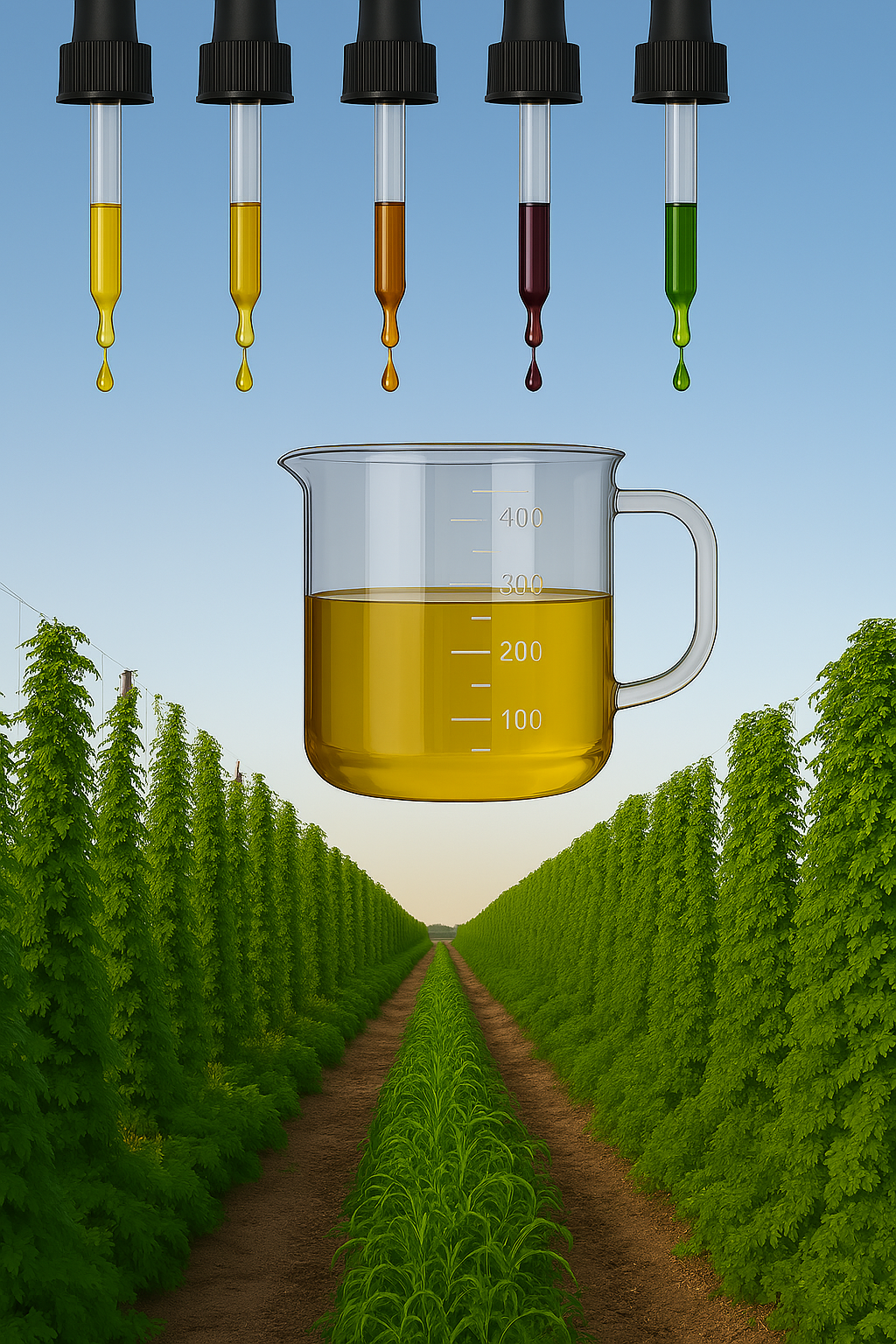
Today, we’re spotlighting a powerful trend: the surge of botanical-based insecticides offering multiple modes of action—without compromising the health of beneficial insects, soil microbiomes, or surrounding ecosystems.
Botanical’s Are No Longer a Niche Option
For years, the narrative was that synthetic chemistry was the only solution for real pest pressure. Not anymore. Companies like EcoStadt, Certis, Marrone Bio, and others are stepping up with high-performance products that match or beat conventional performance. And they’re doing it with fewer environmental trade-offs.
Take EcoWorks EC, a cold-pressed neem oil product, for example. It offers four modes of action (insecticidal, miticidal, nematicidal, and fungicidal), minimal environmental persistence, and is safe on beneficials when used as directed. Products like this aren’t just acceptable—they’re becoming the new standard for forward-thinking operations.
Multi-Mode of Action = Resistance Management
One of the top reasons to rotate in botanicals?
Resistance management.
Pests evolve. If we continue hammering them with the same single-pathway chemistries, we accelerate resistance. But when you integrate products with multiple bioactive compounds—like azadirachtin in neem or terpenes in thyme oil—you’re adding complexity to your defense system. That slows pest adaptation and protects long-term yield potential.
Non-Target Safety: Keep Nature’s Workforce in the Field
Let’s not forget: our biggest labor force doesn’t clock in from the shop—they fly in on wings. Bees, predatory mites, parasitic wasps, ladybugs—these are the unsung heroes of pest management. Yet conventional insecticides, even when targeted, often devastate these allies.
Botanical-based controls (like, rosemary, garlic, and thyme extracts) leave non-target species largely untouched, preserving the very ecosystems that support crop success. And when beneficials thrive, so does your biological control plan.
Application Timing: Lower REIs, Fewer Setbacks
When timing is everything—especially at harvest—re-entry intervals (REIs), pre-harvest interval (PHIs) and maximum residue limits (MRLs) matter. Most synthetic options come with strict restrictions that delay labor, harvest, or shipping. In contrast, botanical insecticides often have 0–4 hour REIs, 0 day PHIs and no or minimal MRLs, which gives you flexibility without compromising food safety or compliance.
Real-World Field Results: Botanical-Based Thrips Control in Onions
In a 2024 trial conducted by the University of Idaho at Parma, researchers evaluated alternative foliar insecticide programs for managing thrips and minimizing Iris Yellow Spot Virus (IYSV) in onions. One standout was the “Regen Ag” program, which integrated EcoWorks EC—a cold-pressed neem oil product—as part of a broader rotational strategy.
Trial Setup
Location: Parma Research and Extension Center, Idaho
Crop: Yellow onion variety ‘Vaquero’
Irrigated with drip, planted in March, harvested in September
Three programs tested: Grower Standard, Regen Ag (with EcoWorks), and Untreated Check
Weekly foliar applications began June 4 when pest thresholds were reached
Thrips Population Control
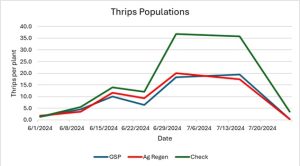
EcoWorks EC (Regen Ag program) significantly reduced thrips populations.
Over 7 sample dates, the untreated control averaged 15.6 thrips per plant.
Regen Ag averaged just 9.1 thrips per plant, statistically equivalent to the Grower Standard (8.6 thrips).
Significant population suppression was observed from June 17 through July 26, critical weeks for thrips feeding.
Plant Health
Both treated programs showed stronger plant health ratings (4.3 out of 5) by August 2 compared to the untreated check (3.1). Minimal visual virus symptoms were observed late in the season, with no significant differences in IYSV between treatments due to overall low virus incidence.
Yield and Bulb Size
Regen Ag produced the highest total yield outperforming both the Grower Standard. This trial also had the highest percentage of jumbo-sized bulbs at 91.5%.
Trial Summary
The Regen Ag program featuring EcoWorks EC:
Controlled thrips comparably to traditional insecticides.
Maintained strong plant health and supported jumbo bulb development.
This trial also did so without the re-entry delays, MRL concerns, or pollinator risk common with synthetic products.
This trial validates what we’ve been saying: botanical-based products like EcoWorks EC work—in real field conditions, on real commercial crops, with competitive performance and fewer environmental downsides.
Affordability Is No Longer a Barrier
Let’s talk cost. In the past, biopesticides came at a premium. But that’s changed. The price-per-acre of top-tier botanical products like EcoWorks EC is equal to or even lower than many conventional synthetics. When you factor in the added benefits—fewer applications, preserved beneficials, and long-term soil health—the value becomes undeniable.
Plus, as more companies move into this space, they’re offering aggressive incentives for crop advisors and agronomists to trial and transition. Industry momentum is building—and the price point reflects that.
EIQ (Environmental Impact Quotient): The Tiebreaker
One way to quantify the difference? Look at the EIQ score. This metric combines toxicity to farmworkers, consumers, and the environment. The lower the score, the safer the product. Neem, thyme, and rosemary oils consistently score far lower than synthetic insecticides—making them ideal choices for regenerative-minded growers looking to market sustainability, reduce liability, and build ecosystem resilience.
The Bottom Line
Switching to botanical insecticides isn’t a compromise—it’s an upgrade. As agriculture faces increasing pressure to reduce environmental impact, protect biodiversity, and maintain productivity, the role of multi-functional, eco-smart solutions will only grow.
At Regen Ag Nation, we’re committed to helping producers make the switch—intelligently, affordably, and at scale. It is important to have the best products available—because the future of ag doesn’t just look different… it works better.


