
In 10 years…
The agronomy of today is not the same as it was ten years ago—and it certainly won’t be the same a decade from now.
At Regen Ag Nation, we’re at the forefront of a transformation in how farmers manage their crops, soils, and inputs. What we’re implementing today—context-based recommendations, metagenomic testing, soft chemistry integration, and data-driven input decisions—will soon become the new standard across agriculture.
Why? Because the data is finally here—and it’s undeniable.
From Experimental to Essential
Regenerative practices have long been dismissed by skeptics as “snake oil.” That skepticism stemmed from one core issue: a lack of reliable data. But today, with advancements in testing, AI modeling, and soil biology understanding, we now have the science to validate what farmers have been experiencing in the field for years. Metagenomic testing allows us to look into the soil’s “black box,” revealing microbial function, disease risk, and biological balance before a single input is applied. AI models layer that biological insight with NDVI, soil maps, and yield data to give farmers precise, field-specific insight. This isn’t guesswork. It’s science-backed, scalable, and actionable.
Context Is King
The most important—and most overlooked—factor in agronomy is context. Whether a grower owns or rents their land, what their water limitations are, their crop rotation, or even how they manage fumigation on a root crop like onions or potatoes… these details matter. That’s why a one-size-fits-all approach to regenerative agriculture doesn’t work. And it’s why Regen Ag Nation has doubled down on “context-based agronomy”—tailoring strategies to the unique circumstances of each operation. This approach not only protects yield but opens doors for smarter reductions in synthetic inputs, better ROI, and long-term soil restoration.
Industry Is Catching Up
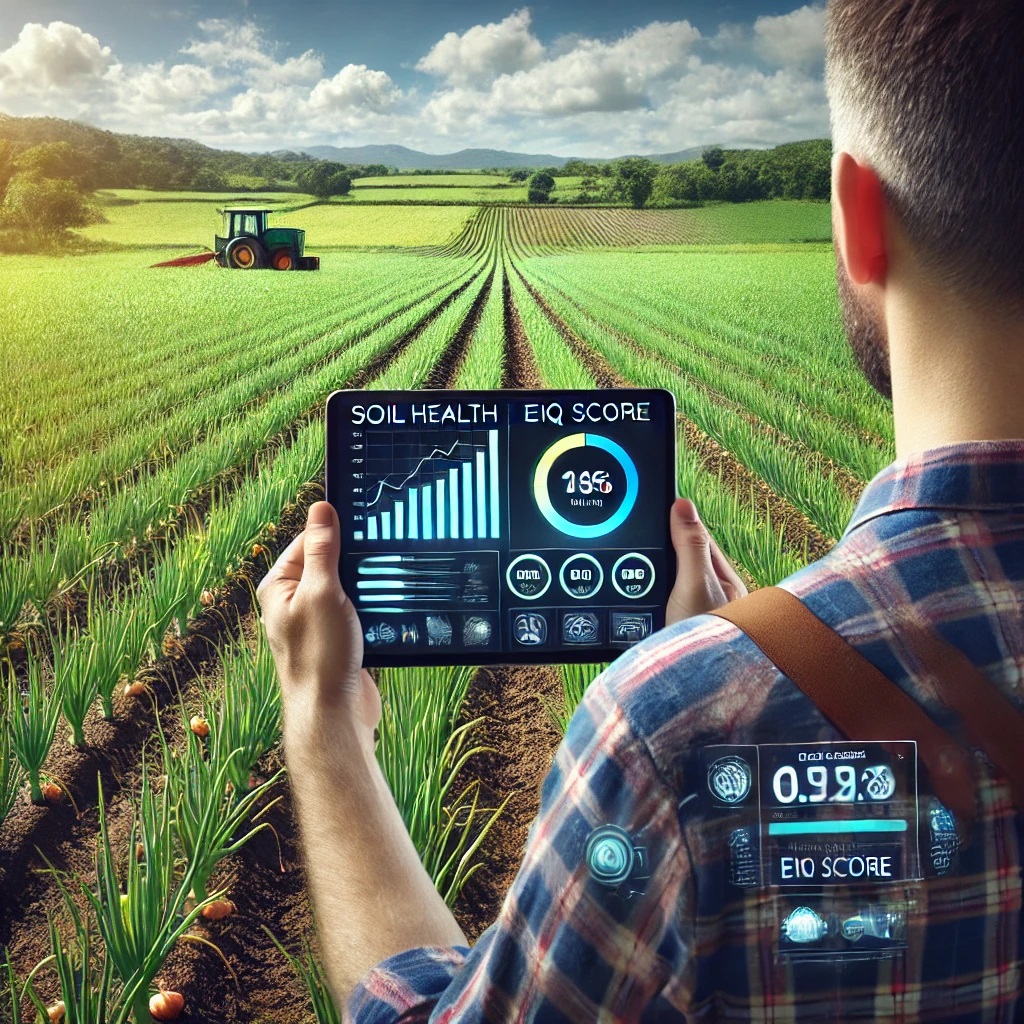
Processors, buyers, and even regulators are starting to recognize that a regeneratively grown crop isn’t the same as a conventionally grown one. We’re helping develop the metrics to prove it—like Environmental Impact Quotient (EIQ) scoring—allowing crops to be tracked and traced down to the amount of chemical used per ton produced.
That’s a game-changer!!!!!
It means farmers can finally start getting paid for what they’re doing differently—taking on the risk of reducing synthetics, adopting biological tools, and improving environmental outcomes.
In the next 10 years, you can expect to see regenerative benchmarks written into contracts, buyer requirements, and retail marketing. And the groundwork is being laid right now.
Biologicals, Testing, and Accountability
We’re also raising the bar for product selection. If a company wants to sell a biological input, they need to show hard data. Farmers shouldn’t be the guinea pigs for untested products—and we’re making sure they aren’t. With rigorous testing protocols and side-by-side comparisons, we’re proving which products actually work and under what conditions.
This kind of data-driven transparency will soon be non-negotiable in agronomy. Growers will demand it. Retailers will require it. And the industry will shift.
The Next Decade of Agronomy
Agronomy of the future is already here—it’s just not evenly distributed yet. But it’s coming fast.
- Testing will be mandatory before recommendations.
- AI modeling will guide decisions on inputs, timing, and rates.
- EIQ and sustainability metrics will be part of every crop contract.
- Context-based consulting will replace blanket recommendations.
- Biologicals will be validated by data or left behind.
At Regen Ag Nation, we’re not just imagining this future—we’re building it. And we’re bringing farmers, suppliers, and processors along for the ride.
The next generation of agronomy is regenerative, data-backed, and rooted in real-world practicality.
And it’s happening now!


