
Transparency in 2025….
At Regen Ag Nation, we believe that growing food shouldn’t come at the cost of our soil, our water, or our health. That’s why we’ve created something bold and new—something that challenges the status quo of conventional agriculture.
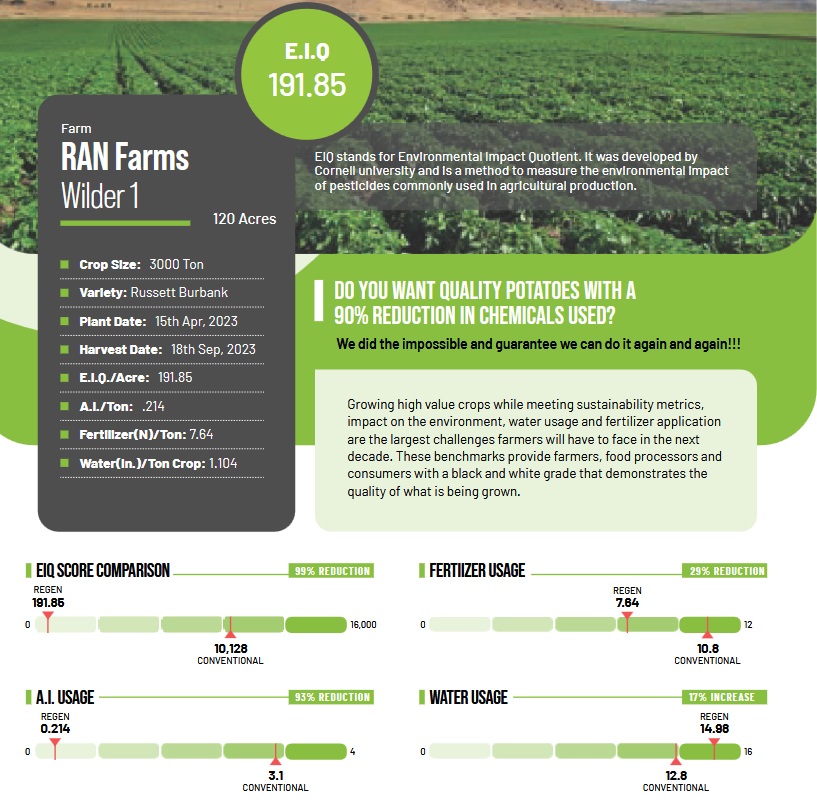
We call it the Field Summary Analysis (FSA). This one-page report captures every critical aspect of how a crop was grown over the course of an entire season. It’s not just a snapshot—it’s a full-season breakdown that brings transparency to the marketplace and gives growers, buyers, and consumers a clear look at what truly regenerative farming can accomplish.
Why the FSA Matters
The agricultural industry has long relied on yield, price per ton, and cost of production as the primary metrics for success. But those numbers don’t tell the full story. They don’t show how much synthetic nitrogen was used. They don’t reveal the chemical burden placed on the environment. They don’t reflect the long-term health of the soil—or the food on our tables. The FSA changes that. By aggregating all field inputs, including pesticide applications, fertilizer usage, irrigation data, and environmental impact, we’re able to demonstrate just how different regenerative farming really is. And the results speak for themselves.
What the Numbers Say
Let’s take one of our RAN Farms fields as an example—120 acres of Russet Burbank potatoes grown in Wilder, Idaho.
Here’s what our Field Summary Analysis revealed:
- EIQ Score (Environmental Impact Quotient):
🔻 191.85 per acre, compared to over 16,000 under conventional methods—a 99% reduction in environmental impact. - Active Ingredient Usage:
🔻 0.214 lb/ton, compared to 3.1 lb/ton in conventional programs—a 93% reduction in synthetic chemical usage. - Nitrogen Fertilizer Input:
🔻 7.64 lb/ton compared to 10.8 lb/ton—a 29% reduction in nitrogen input. - Water Usage:
🔻 14.98 gallons/lb of crop grown, showing a significant reduction in irrigation needs due to healthier, more biologically active soils.
Rethinking What “High Quality” Means
For decades, “success” in agriculture has been measured by how much you can grow for how little. But the future of food demands more than that. It demands resilience, accountability, and nutrition—all while meeting new environmental standards and consumer expectations.
The FSA proves that it’s possible to:
- Grow the same quantity of crop.
- At the same or lower cost.
- Using fewer inputs and less water.
- While delivering a cleaner, healthier product for downstream consumers and supply chains.
This kind of reporting gives producers leverage. It gives buyers and processors a reason to pay attention. And it gives consumers peace of mind, knowing that the food they’re eating isn’t just cheap—it’s good for them and the planet.
The Future Is Transparent
The Field Summary Analysis is more than a report—it’s a movement. It’s about holding agriculture to a higher standard and giving regenerative farmers the credit they deserve. In a world increasingly focused on ESG metrics, carbon intensity, and sustainability audits, the FSA provides hard data that can be used across the food chain—from farm to shelf.
We’re not just growing potatoes—we’re growing proof that there’s a better way to farm.


