
Understanding Scope 1, 2, and 3…
The agricultural industry is entering a new era of accountability. As environmental regulations tighten and sustainability reporting becomes the norm, the terms Scope 1, 2, and 3 emissions are becoming central to how agricultural companies — and increasingly, farmers — assess their impact on climate.
But what do these scopes actually mean?
Why are they important?
And how will they impact farmers’ day-to-day operations and long-term plans?
What Are Scope 1, 2, and 3 Emissions?
These three categories come from the Greenhouse Gas Protocol, the global standard for measuring and reporting carbon emissions:
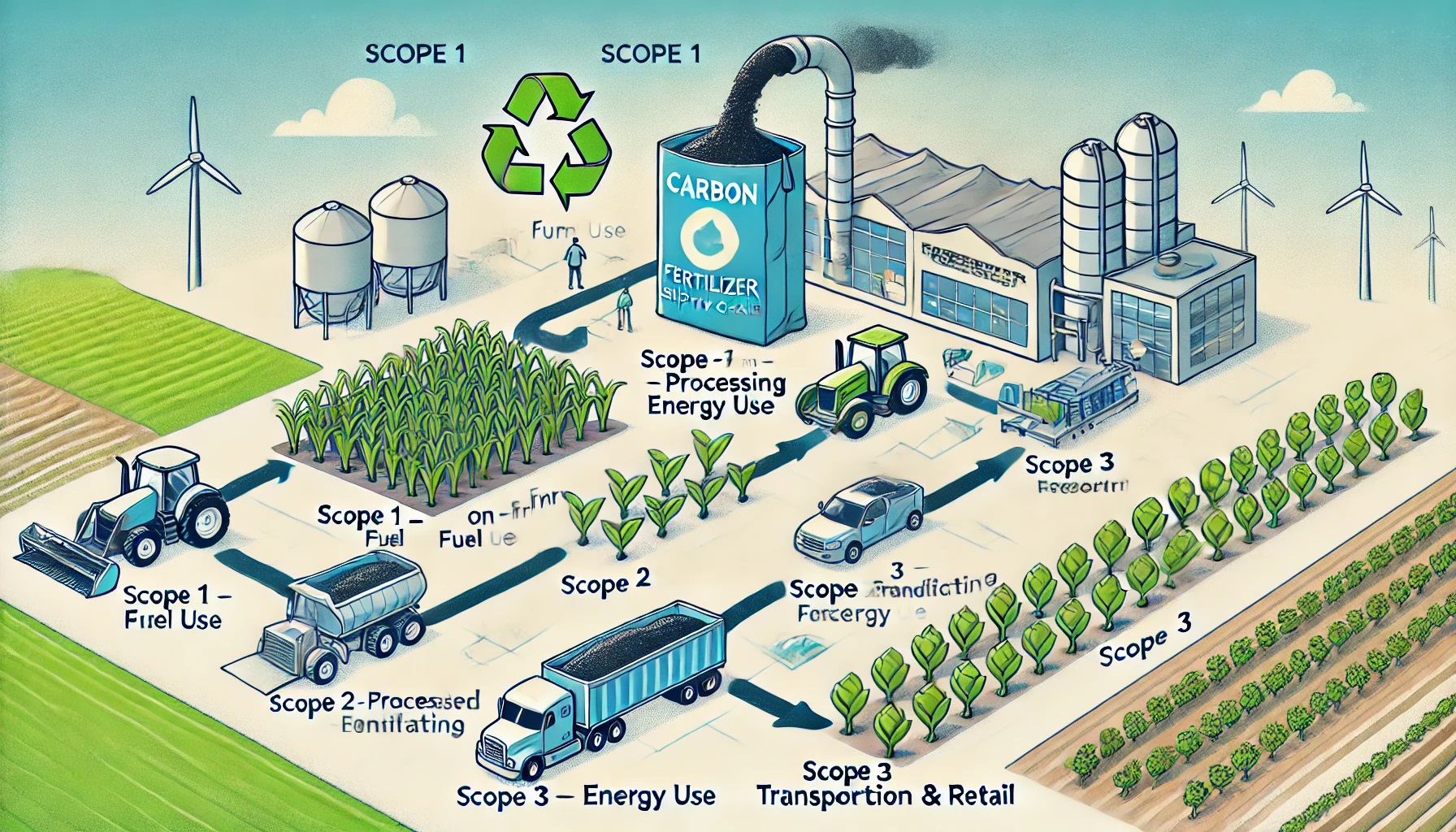
Scope 1: Direct Emissions
These are emissions from sources a company owns or controls directly.
In agriculture, Scope 1 includes:
- Fuel used by tractors, trucks, and equipment.
- Emissions from on-site fertilizer or pesticide production (if applicable).
- Methane emissions from livestock (for integrated operations).
Scope 2: Indirect Energy Emissions
Scope 2 covers indirect emissions from the generation of purchased electricity, heating, or cooling that the company uses.
For example:
- Electricity used to run irrigation systems or cold storage.
- Energy consumed in Ag processing facilities or controlled environments (greenhouses, barns, etc.).
Scope 3: Supply Chain Emissions
Scope 3 is the most complex and far-reaching. It includes all other indirect emissions — both upstream and downstream — in a company’s value chain.
Examples in Ag:
- Emissions from producing fertilizer, pesticides, and seed.
- Transport of goods to and from the farm.
- Emissions from the use of sold products (e.g., nitrous oxide from applied nitrogen).
- Disposal of packaging or agricultural waste.
- Land use changes (e.g., deforestation for expansion).
How Are Agricultural Companies Starting to Use These?
Ag companies — especially input manufacturers, food brands, and retailers — are under pressure to reduce their carbon footprint. Many now report Scope 1, 2, and 3 emissions publicly and are setting Science-Based Targets to reduce them.
Here’s how it’s playing out:
- Fertilizer companies are reporting emissions from ammonia production and transitioning to green ammonia made from renewable hydrogen.
- Food processors are calculating emissions from their supply chains and identifying hot-spots — like synthetic fertilizer use or tillage — to incentivize lower-emission practices.
- Retailers and CPG brands are asking for farm-level data to understand Scope 3 impacts — which makes farmers part of the emissions equation.
Why Are Scope 3 Emissions Different?
Scope 3 is different because companies don’t directly control these emissions — but they are still responsible for them.
That’s a big deal in agriculture. Farmers are often part of someone else’s Scope 3 emissions — whether it’s the seed company, the processor, or the end food brand. This is where carbon intensity scoring, field-level data, and sustainable practices become essential.
Is 2030 Still the Benchmark?
Yes — 2030 remains the global benchmark year for major climate commitments. Many organizations, governments, and multinational companies have publicly committed to these goals. The Sustainable Agriculture Initiative is one of the largest groups of companies on the planet that are leading benchmarks in the following:
- Reducing emissions by 30–50% (or more) by 2030.
- Sourcing all materials from verified low-carbon suppliers.
- Requiring sustainability metrics from farms and input providers.
Examples:
- Walmart has pledged to reduce 1 billion metric tons of emissions (Scope 3 focus) by 2030.
- Companies aligned with the UN Race to Zero are under the same 2030 time frame.
- The EU Farm to Fork Strategy is pushing for full traceability and climate metrics from Ag production.
How Will This Impact Farmers?
Here’s where it gets real.
As Scope 3 data becomes essential to companies’ carbon reports, farmers will be asked to provide data — and potentially change how they farm.
Expect to see:
- Requests for field-level emissions reports or fertilizer/spray records.
- Demand for low-carbon or carbon-neutral products.
- Preference for regenerative practices that increase soil carbon and reduce input intensity.
- Incentives or premiums for using carbon-efficient tools, inputs, or technologies.
What Should Farmers Do Now?
To stay ahead, farmers should begin to:
- Document all inputs and field practices clearly.
- Explore lower-carbon options — like biologicals, controlled-release fertilizers, or precision tech.
- Understand their carbon footprint (tools are emerging for this).
- Look for brands or buyers offering incentives for sustainability.
- Connect with platforms like Regen Ag Nation to find tools, inputs, and support that align with this shift.
The Future is Measurable
Carbon intensity scoring and Scope 1, 2, 3 tracking are no longer theoretical — they’re becoming a new standard in agriculture. By 2030, supply chain transparency, emissions reporting, and regenerative verification may determine who gets market access, premiums, or partnerships. For companies and farmers alike, now is the time to get fluent in carbon metrics and build the systems that make sustainability scalable.
https://www.nationalgrid.com/stories/energy-explained/what-are-scope-1-2-3-carbon-emissions
https://www.epa.gov/climateleadership/scope-1-and-scope-2-inventory-guidance


