
Regenerative Agriculture 101: Rebuilding Soil, One Input at a Time
At Regen Ag Nation, our mission is simple—reduce chemical fertilizers and replace them with regenerative solutions that build healthier soil and stronger farms.
What is Regenerative Agriculture?
Regenerative agriculture is more than a trend—it’s a necessary shift in how we grow food. While conventional agriculture relies on synthetic chemicals, heavy tillage, and a “more is better” philosophy, regenerative agriculture focuses on working with nature. It prioritizes soil health, plant health, and long-term resilience over short-term yield bumps driven by chemical dependency.
The Problem with Conventional Ag
In conventional systems, if a crop shows signs of stress, the immediate answer is often more nitrogen, more fungicide, more inputs. This model has led to degraded soils, compaction, low organic matter, and a severe loss of biological diversity.
We’ve stripped our soils of life, tilled away structure, and flooded fields with synthetic fertilizers—leading to poor nutrient cycling and an over-reliance on external inputs. The system is broken.
The Regenerative Solution
Regenerative agriculture flips this script. Instead of attacking problems with more chemicals, we feed biology, rebuild soil structure, and support plant health from the ground up.
Key Principles We Focus On:
Diversity Above and Below Ground
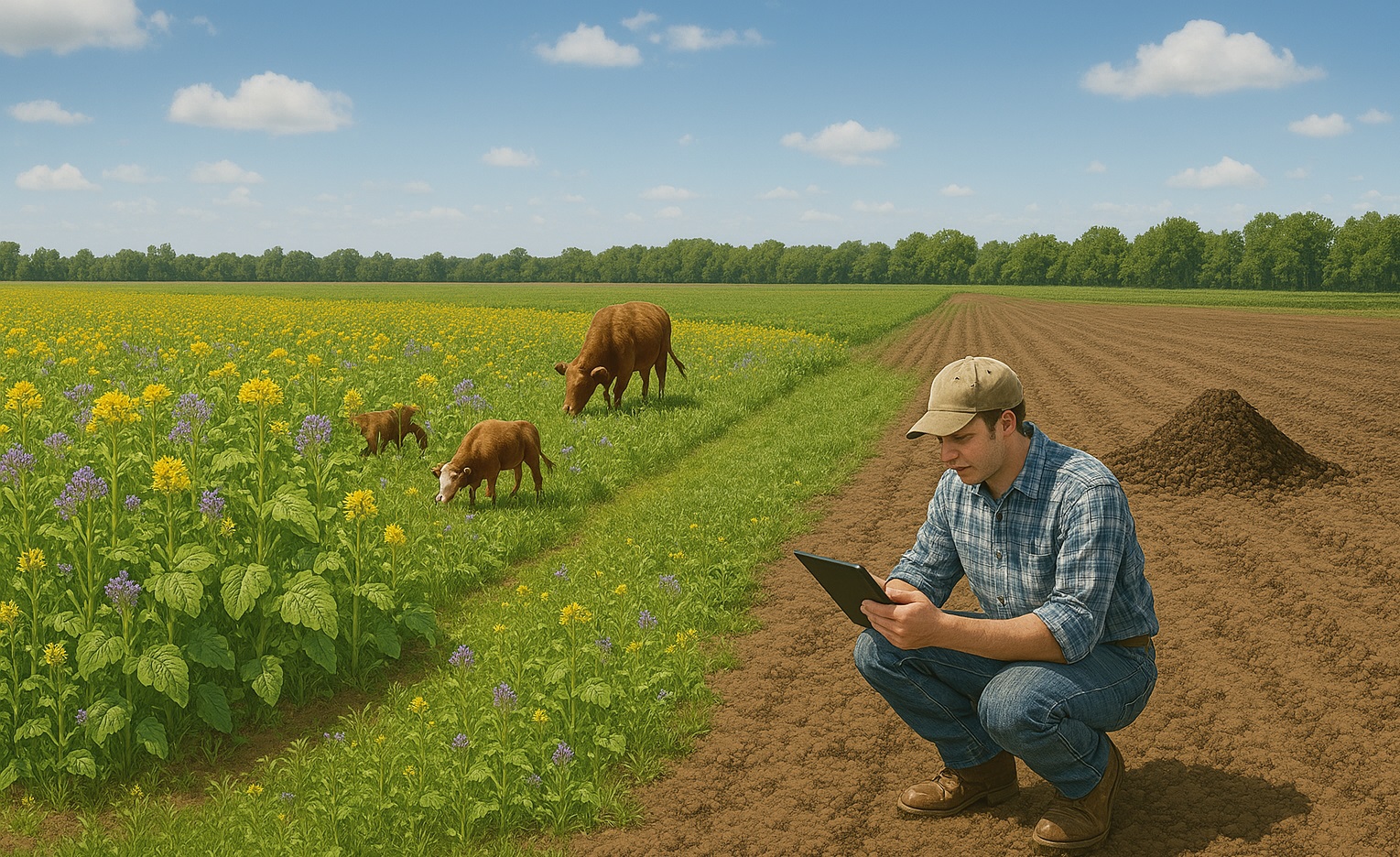
Regenerative farming brings back biodiversity through practices like multi-species cover cropping. These diverse root systems pump root exudates—organic compounds that feed microbial life—into the soil. This reawakens dormant biology and jump starts nutrient cycling.
Soil Structure and Organic Matter
Tillage and synthetic fertilizers have reduced soil organic matter and disrupted soil function. Regenerative inputs like compost help rebuild soil organic carbon and support resilient soil systems—especially on farms without livestock.
Livestock Integration
Where possible, integrating animals into crop rotations is a powerful regenerative tool. Grazing livestock on cover crops or crop stubble recycles nutrients through manure and urine, reducing the need for diesel-powered fertilizer applications. It’s nature’s way of closing the loop.
Reducing Chemical Fertilizers with Sustainable Alternatives
Our core focus at Regen Ag Nation is replacing synthetic fertilizers with regenerative inputs—products that support biology, buffer stress, and provide nutrients in more natural forms. This isn’t just about reducing inputs; it’s about improving results.
Precision Nutrition Through Modern Testing
Using tools like SAP analysis and biological soil testing, we move beyond calendar-based NPK applications. We monitor how nutrients move in real time, allowing farmers to fine-tune plant nutrition and achieve balance without dumping hundreds of pounds of synthetic fertilizers.
Regenerative Inputs: What We Recommend
We seek out the best regenerative inputs on the market—composts, biological inoculants, humic and fulvic acids, fish hydrolysates, seaweed extracts, microbial stimulants, and more. Each product we evaluate is designed to:
- Enhance soil biology
- Improve nutrient efficiency
- Reduce environmental impact
- Help farmers transition away from chemical dependency
This is the future of farming—not just sustainable, but regenerative.
The Regenerative Circle
When you integrate regenerative practices—cover cropping, compost, livestock, biology-based fertility—you create a regenerative circle. Each component feeds into the next. The waste from one system becomes fuel for another. You reduce outside inputs, cut costs, and build long-term resilience.
At Regen Ag Nation, we’re not just talking about regenerative agriculture—we’re building the tools, the network, and the content to make it work for real farmers. Whether you’re ready to go all in or just take the first step, we’re here to help you find the regenerative inputs and strategies that fit your context.
Healthier SOIL. Stronger CROPS. Smarter FARMING.
That’s regenerative agriculture.


